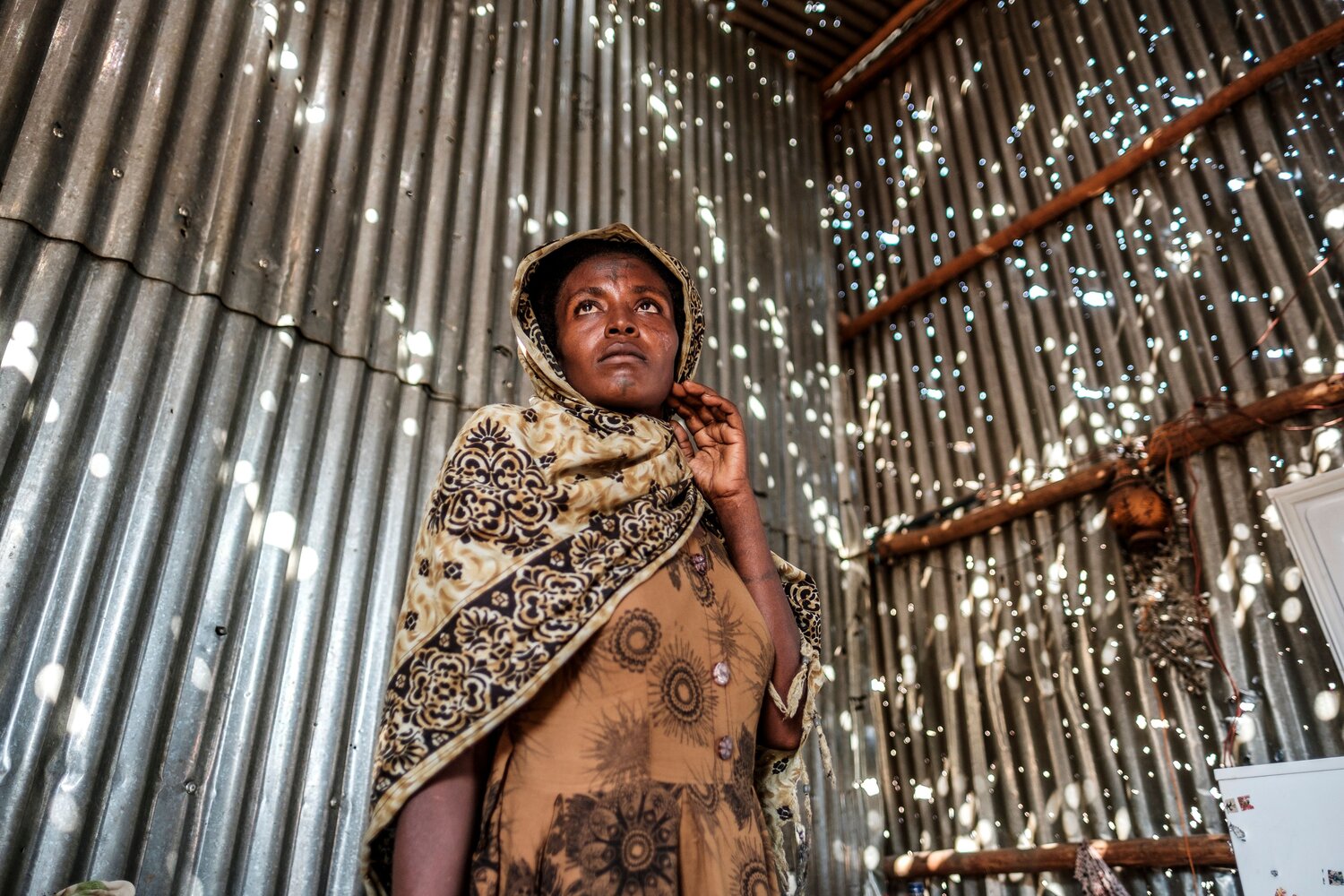
TOPSHOT - A woman stands in a metal sheet room that was damaged by shelling, in Humera, Ethiopia, on November 22, 2020. - In that residential compound, two women and an elderly man were killed by shelling and gunfire, while two other women remain on makeshift stretchers as they recover from their wounds. Prime Minister Abiy Ahmed, last year's Nobel Peace Prize winner, announced military operations in Tigray on November 4, 2020, saying they came in response to attacks on federal army camps by the party, the Tigray People's Liberation Front (TPLF). Hundreds have died in nearly three weeks of hostilities that analysts worry could draw in the broader Horn of Africa region, though Abiy has kept a lid on the details, cutting phone and internet connections in Tigray and restricting reporting. (Photo by EDUARDO SOTERAS / AFP) (Photo by EDUARDO SOTERAS/AFP via Getty Images)
Source: Refugee International
October 7, 2021
This Wednesday, October 6, marked 100 days since the government of Ethiopia imposed a blockade on the northern region of Tigray, cutting off all delivery of humanitarian goods, electricity, communications, and services. Behind the blockade, civilians cut off from the world are facing starvation and famine conditions. These conditions are entirely man-made. Refugees International is calling for an end to the blockade.
Statement from Refugees International Vice President for Programs and Policy Hardin Lang:
“When the blockade began 100 days ago, the United Nations said it needed to get 100 trucks of relief aid a day into Tigray to prevent the worst. As of now, just over 600 trucks have made it in. The math is clear and does not lie. Millions in Tigray are starving, and millions more in northern Ethiopia are at risk.”
Statement from Refugees International #StopTigrayFamine Campaign Lead David Del Conte:
“Time has run out. Humanitarians have pleaded for 100 days to allow aid to reach Tigray. All parties to the conflict must be persuaded to change course. It is now up to policymakers and diplomats in the U.S. government, the United Nations, the African Union, and other states to urge Abiy and other parties to the conflict to save lives; to immediately stop the violence and seek peaceful resolution; and to allow food and medicine to reach the dying.
Every day that the blockade remains in place means more lives lost. It is time to act.”
Learn more about Refugees International’s #StopTigrayFamine Campaign: https://www.refugeesinternational.org/stop-tigray-famine
For more information or to schedule an interview, please contact Sarah Sheffer at ssheffer@refugeesinternational.org or +1 202 540 7029.
About the Author